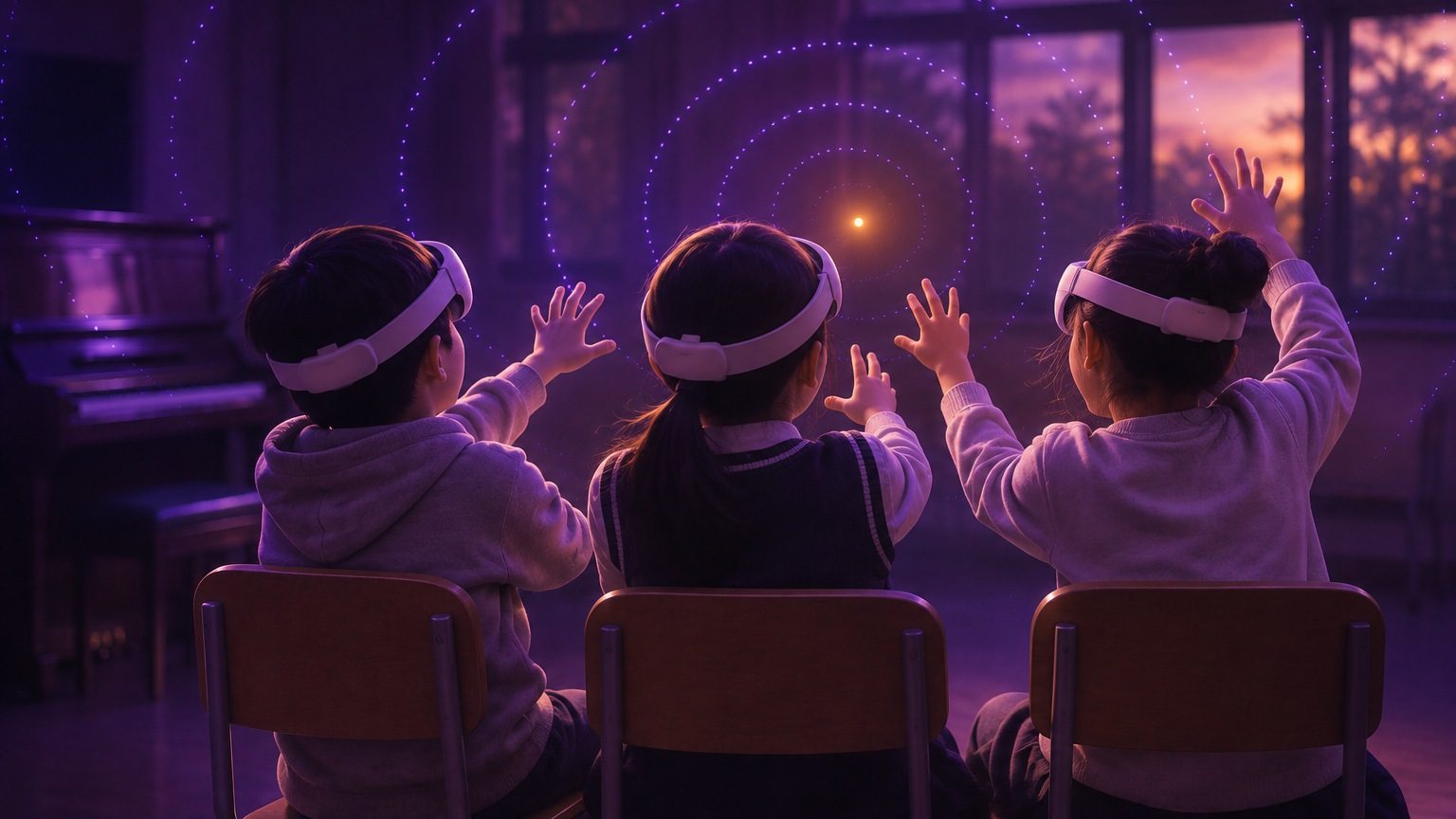
Follow the sound, reach out, and space becomes music
XR spatial music lessons
For students whofear open space,sound becomes a map
Halotune is a music lesson where blind and low-vision students learn space through sound and their fingertips. Every key sounds from its own place, so a student knows where to reach without seeing it.
What we saw in the classroom
The biggest wallis not the loss of sight.It is the fear of space.
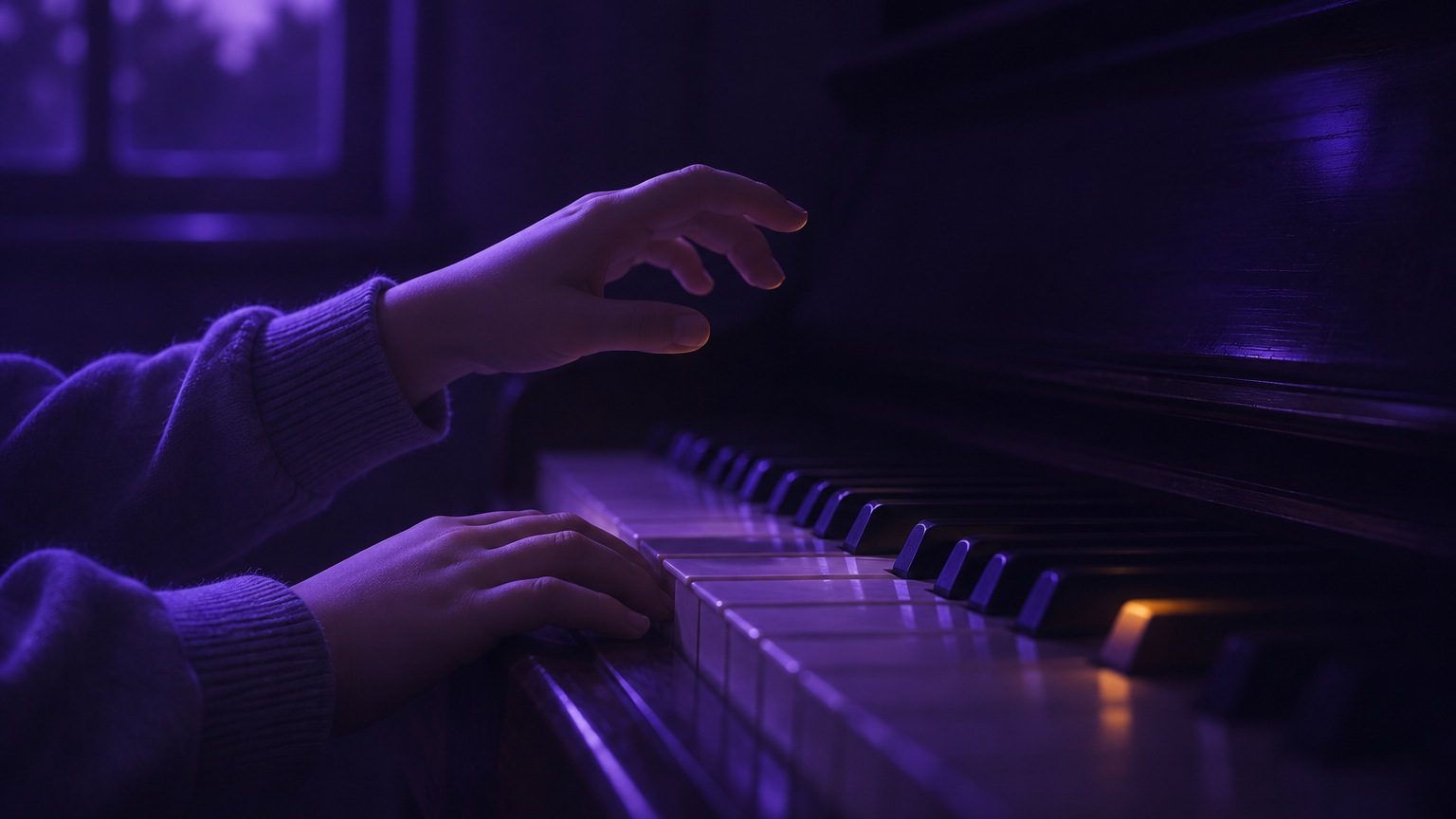
On the piano there is a move called a leap: the hand travels to a far-away key in one motion.
In piano lessons at a school for the blind, students stop in front of this leap. Not because they might play a wrong note. They cannot even try.
When you cannot tell where your hand will land, the empty space in between becomes a distance you cannot cross.
When it is time to leap, A says:
“Teacher, please help me.”
B plays the piano quite well. Yet in all these years of lessons,
“B has never once made a leap alone.”
Scenes our founder saw in her own lessons. Students are identified only by grade and a letter.
Fear feeds itself
- Fear keeps the hand from reaching out
- Without reaching, experience does not build up
- Without experience, fear hardens
247,000
people registered with a visual impairment in Korea
Ministry of Health and Welfare registry (2024)
90%
of adults with a visual impairment said getting around is difficult
A French survey, cited in a 2025 review in Sensors
29%
said they do not go out without help
Same survey
What is missing is not eyesight.It is a sense for predicting space, and a safe place to practice it again and again.
A one-minute try
Before the words, feel it yourself
Try a leap across the keys on screen. Once while seeing, once with the keys hidden, and once guided by sound.
- Seeing
- Hidden
- Sound guide
- Play
Earphones make the direction of the sound easier to hear. On an iPhone, switch off silent mode.
You can also use the keyboard: the left and right arrows move the hand, the space bar presses. If you use a screen reader, you can skip this part and miss nothing.
This is a very simple try-out for the web. It does not reproduce what blind students experience, and the real Halotune is played with a headset, reaching into the space in front of the body.
Skip the experienceWhat Halotune does
A problem of spaceis solved in space
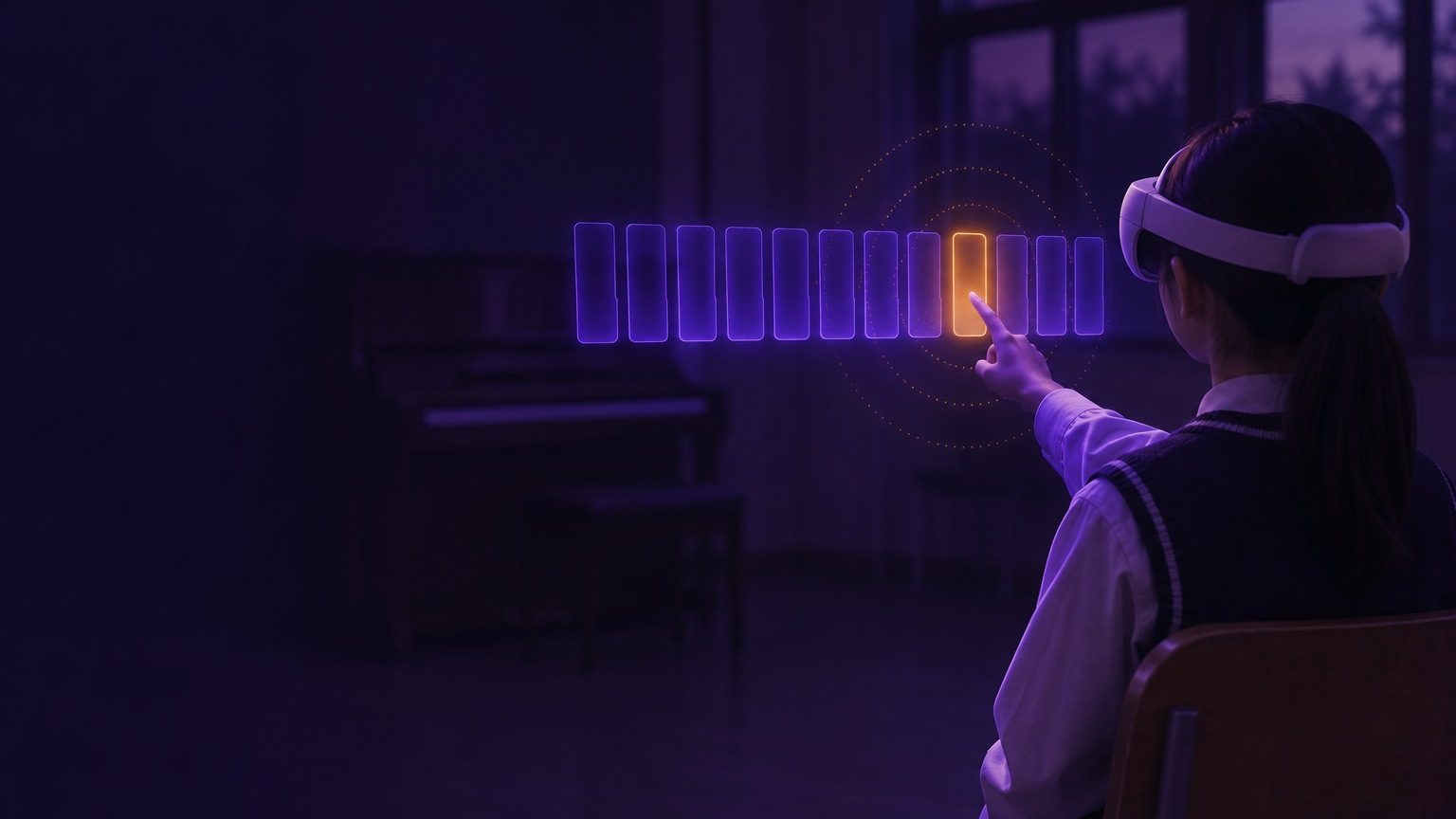
Halotune places a keyboard in a space where there is nothing to bump into. The student puts on a headset and reaches toward the sound. A lesson repeats four steps.
Hear
The next key sounds from its own place
There is no on-screen guide. The student judges by ear which side the sound comes from and how far away it is.
Reach
The hand reaches toward the sound
The song waits. No one is rushed until the right key is found.
Touch
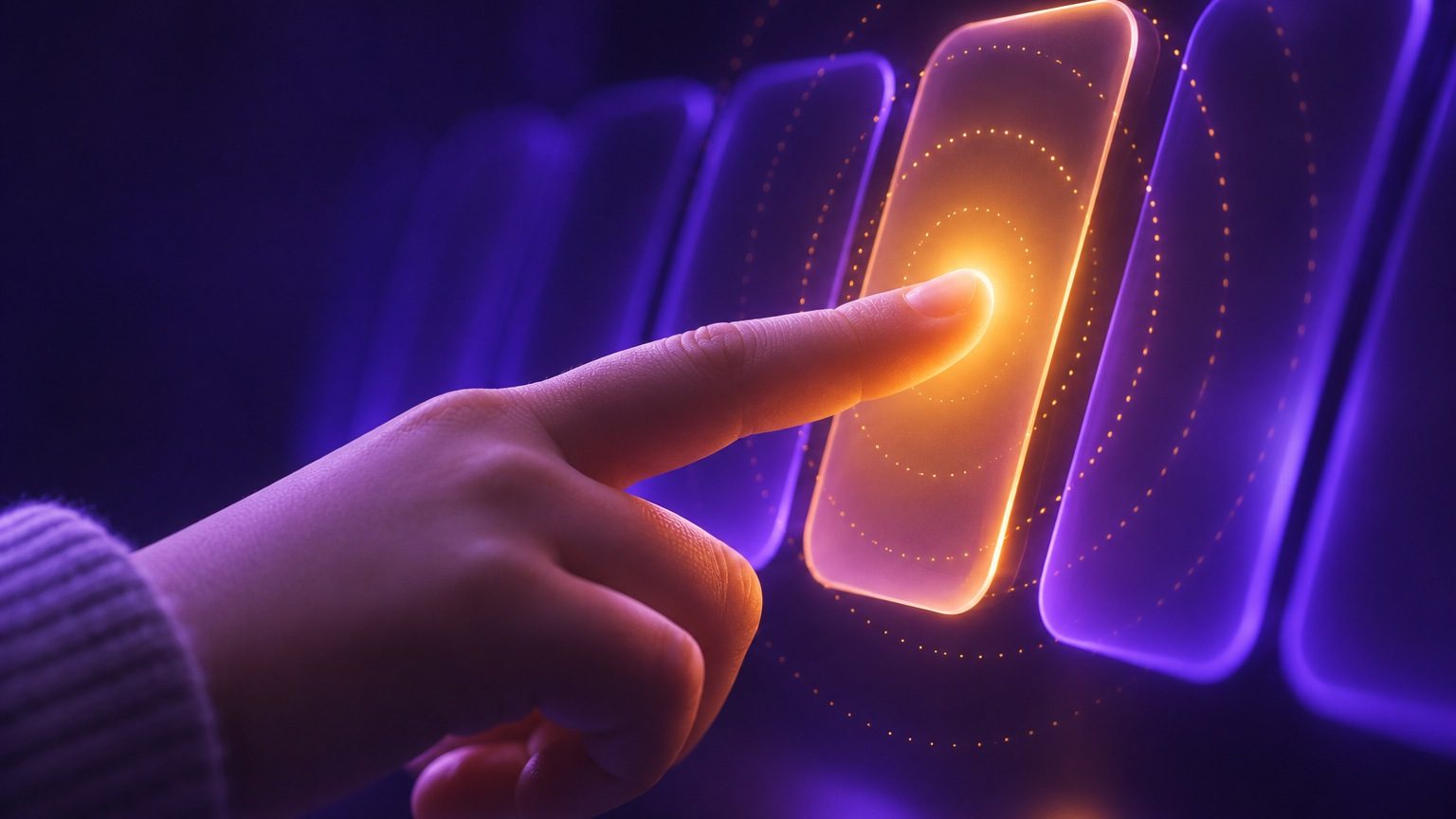
On contact there is sound, and a vibration at the fingertips
The student confirms the touch by ear and by hand together. Vibration gloves are optional.
Connect
Note by note, it becomes a tune
As successes add up, reaching out should feel less frightening. Halotune builds the experience of playing a whole tune to the end.
‘Playing the piano in the air’, a method from the classroom
In her lessons our founder has long had students learn hand shapes in the air first, and she calls it playing the piano in the air. Halotune adds space, sound and touch to that teaching method. It is not a concept invented at a desk.
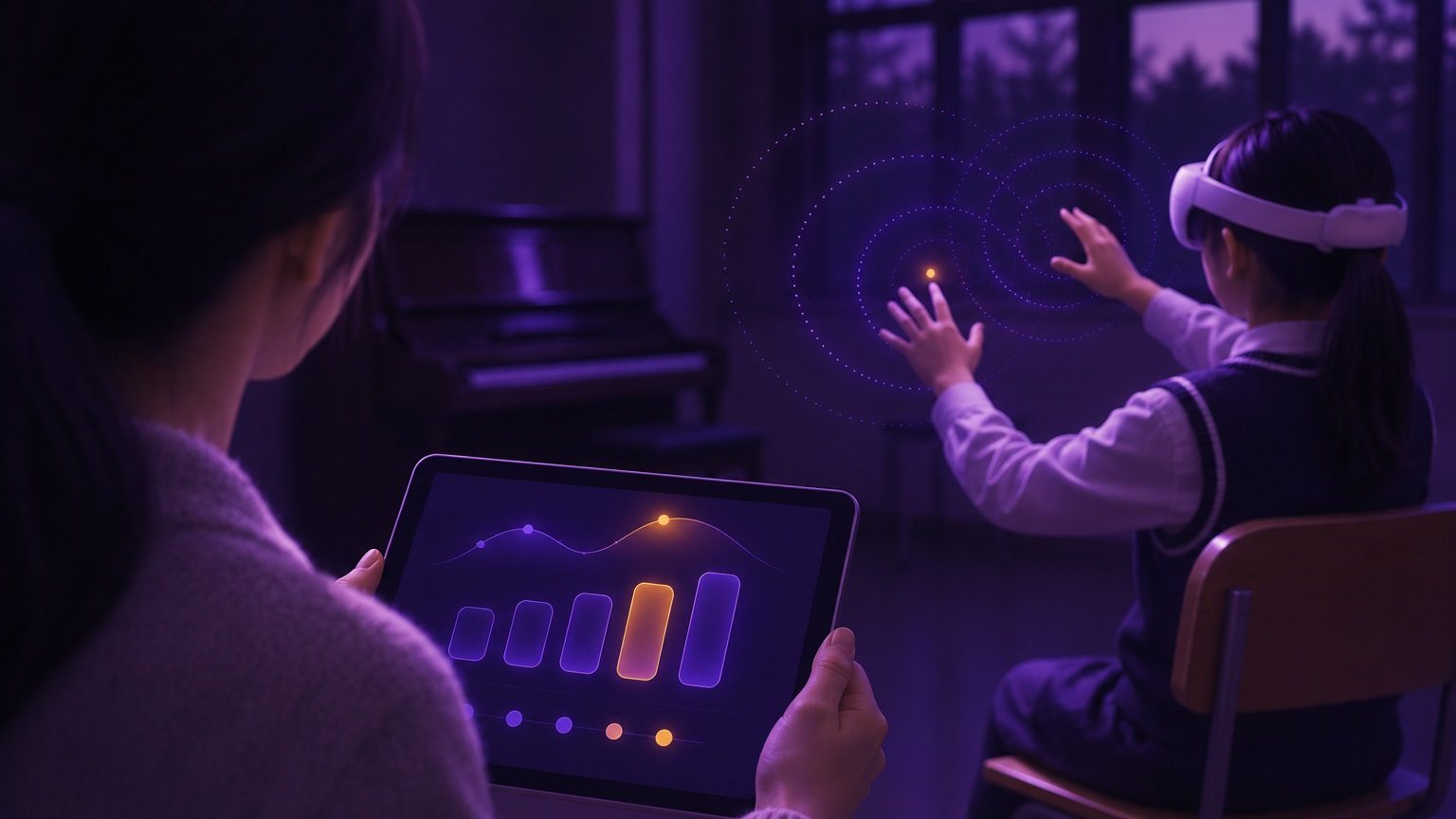
The teacher’s screen
The student does not operate the device. Starting and stopping, choosing a song and changing the tempo all happen on the teacher’s screen. What was played is kept as a record that helps prepare the next lesson.
- Note accuracy
- Time to reach
- Sense of rhythm
- Completion rate
Records are lesson material, not a medical assessment.
Core technology
Six things that let students play without seeing
A different sound from each place
Every key sounds from where it actually is. This is 3D spatial audio using HRTF, the way human ears tell direction. A key on the left is heard on the left, and a far key sounds far.
Keys that stay put in the room
The keys do not follow the head. Turn your head, and the G is still where it was yesterday. The keyboard can have from 8 to 88 keys.
A song that waits
The song waits until the student finds the right key. No chasing the beat: each student plays to the end at their own pace.
Bare hands, and a vibration at the fingertips
The headset tracks the hands with no controllers. With vibration gloves, the moment of contact is confirmed at the fingertips.
A connection that stays in the classroom
The teacher’s laptop and the headset connect directly over the classroom Wi-Fi. Lessons work in classrooms with no internet.
One off-the-shelf headset
Halotune runs on a consumer MR headset (Meta Quest 3S), not on special equipment. We chose this so that no school is held back by the cost of hardware.
What you can do with Halotune today
With one headset and the teacher’s laptop, a lesson can start in the classroom right away.
Lessons on an off-the-shelf MR headset
One Meta Quest 3S and the classroom Wi-Fi are enough
15 lesson scenarios
Connecting the device, laying out the keys, a song that waits, tempo control, bare-hand play and more
A teacher’s manual and an installer package
A 64-page manual and a double-click installer, ready for a first-time teacher
Pilot lessons at schools and welfare centers
We open pilot lessons together with your institution. Get in touch
The film
Halotune in two minutes
English captions are on screen.
Read what the film says
For a blind child, the space around the body can feel unpredictable. Reaching out feels risky. So many keep their hands close. They move less, explore less, and miss daily practice in the spatial skills that mobility and braille build on.
43 million people are blind, and 9 in 10 live in low- and middle-income countries.
Halotune turns a standard mixed-reality headset into a music lesson that doesn't need sight. Piano keys float in a row in front of the student and stay put when the head turns. Every key sings from its own place in space.
A soft guide tone shows where to reach next, and in wait mode, the song waits. No one is rushed. Students play with bare hands or with haptic gloves that add a gentle vibration.
Teachers guide the lesson from a simple dashboard and see every reach, right or not, how fast and how close. It works without internet, on one classroom laptop.
Halotune grew from the classroom method of our team lead, a music therapist who has taught at a school for the blind for four years. She calls it playing piano in the air. (In Korean) “I believed a problem of space had to be solved in space.”
In four months, our team built a working prototype. Our first pilot, with a welfare center for the blind, begins this December. It runs on a 299-dollar consumer headset, so it can reach schools that could never afford specialist equipment.
Reach. Hear. Play. Every lesson is practice in exploring the space around them. Halotune. Sound becomes a map, and every reach becomes music. We're SONOPIX. Help us bring Halotune to every classroom that needs it.
Where technology should reach
A safe place to experienceunseen space again and again,for every blind and low-vision student
In the classrooms our founder has seen, almost the only time spent learning space was cane travel training. Halotune wants to set one more place beside it, a joyful one called music. We believe good technology should first reach the people who need it most.
This is the change Halotune wants to make.
Same day, same lesson
New features go to every institution on the same day, so the quality of a lesson does not depend on where you live.
Shared records
We plan to study records that cannot identify anyone, and to publish what we find.
Small institutions first
Pilot sites and small institutions get Halotune free or at a discount, and we will connect foundations and grants to lower the cost of starting.
With the people it is for
Blind people and classroom teachers take part in design and review.
247,000
people registered with a visual impairment in Korea
Ministry of Health and Welfare, 2024
43 million
people who are blind worldwide (2020)
WHO · IAPB
US$299
launch price of the consumer headset Halotune runs on
Meta Quest 3S
- Korea’s Digital Inclusion Act (in force January 2026)
- UN CRPD Article 24: education
- SDGs 3 · 4 · 10 · 17
The person behind it
It began in a classroom
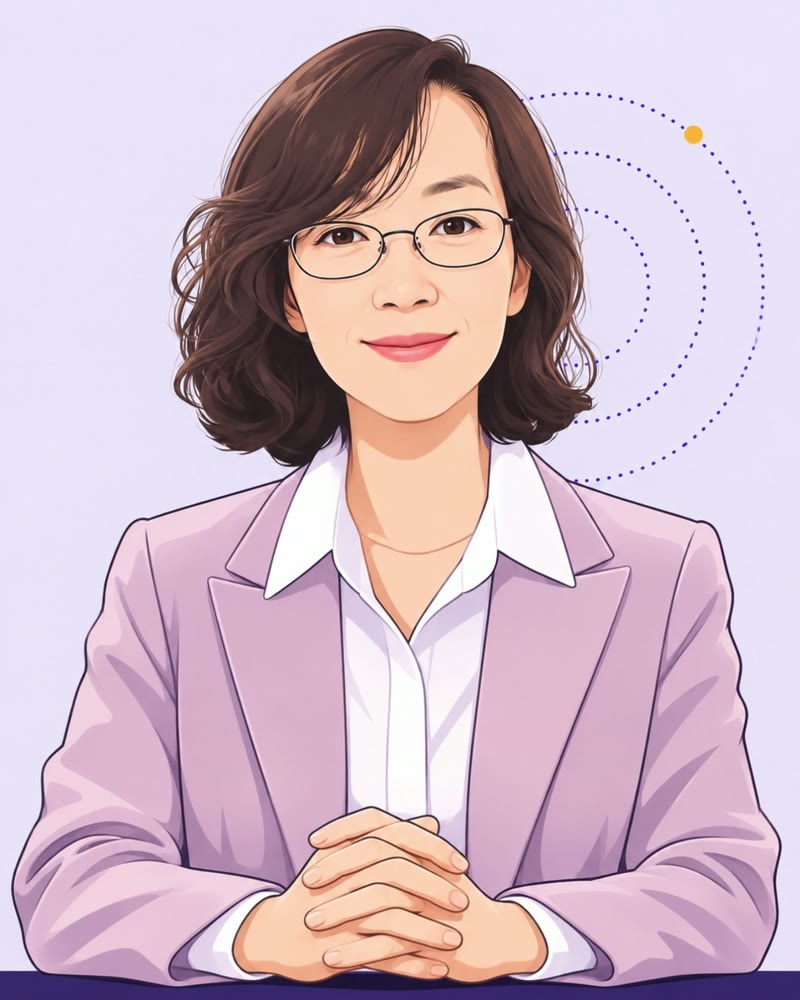
My students cannot move their handsto a key that is far away.They cannot know where the hand will land.
A pianist by training, and a teacher in her fourth year of teaching piano at a school for the blind. She first met blind students in 2015 as a volunteer at Hanbit School for the Blind, and has taught at Seoul National School for the Blind since 2023. Halotune began with a question from that classroom.
High school
Two hours at the piano
During a long illness, she opened the piano lid for the first time in years and played for two hours. For those two hours her body did not hurt. That day she decided to study the piano.
1996 to 2005
How does music help people?
She studied piano at the College of Music, Seoul National University, then completed a master’s degree in music therapy at the Graduate School of Education, Ewha Womans University, and worked as a music therapist at the Ewha Music Therapy Clinic.
2015
Pushing a stroller, once a week
She phoned Hanbit School for the Blind herself. Pushing a stroller, she went once a week for a year and taught piano to two students.
2023 to now
Piano lessons at Seoul National School for the Blind
As a part-time piano and music therapy instructor, she meets nine students for nine hours every week. When she notices something a student needs, she can try it in the very next lesson.
A winter break, three years in
A problem of space, solved in space
She came to think that habits her students could not shake came from space they could not see. She ordered vibration gloves herself, installed a development tool, and made 88 spheres play piano notes.
Education
- Bachelor’s degree in piano, College of Music, Seoul National University (1996 to 2000)
- Master’s degree in music therapy, Graduate School of Education, Ewha Womans University (2002 to 2005)
- Bachelor’s degree in painting, Seoul Digital University (2023 to 2026)
- Doctoral student, Literature and Art Therapy, Konkuk University (2026 to present)
Career
- Part-time instructor in piano and music therapy, Seoul National School for the Blind (March 2023 to present)
- Pianist, Maria Magdalena Kirche, Freiburg, Germany (September 2018 to March 2020)
- Volunteer piano teacher, Hanbit School for the Blind (2015)
- Part-time lecturer in instrumental teaching, Myongji College (2010 to 2011)
- Part-time lecturer in clinical music therapy, Graduate School of Education, Ewha Womans University (2009)
- Music therapist, Ewha Music Therapy Clinic (2003 to 2005)
The way my blind students change is the way I change, and the way this system grows is the way I grow.
Team SONOPIX
The classroom’s question and XR technology sit on one team.
- FounderTeaching method and measurement design, running lessons
- XR development · BusinessLeads product development and the business model
- XR researchTechnical advice, measurement design